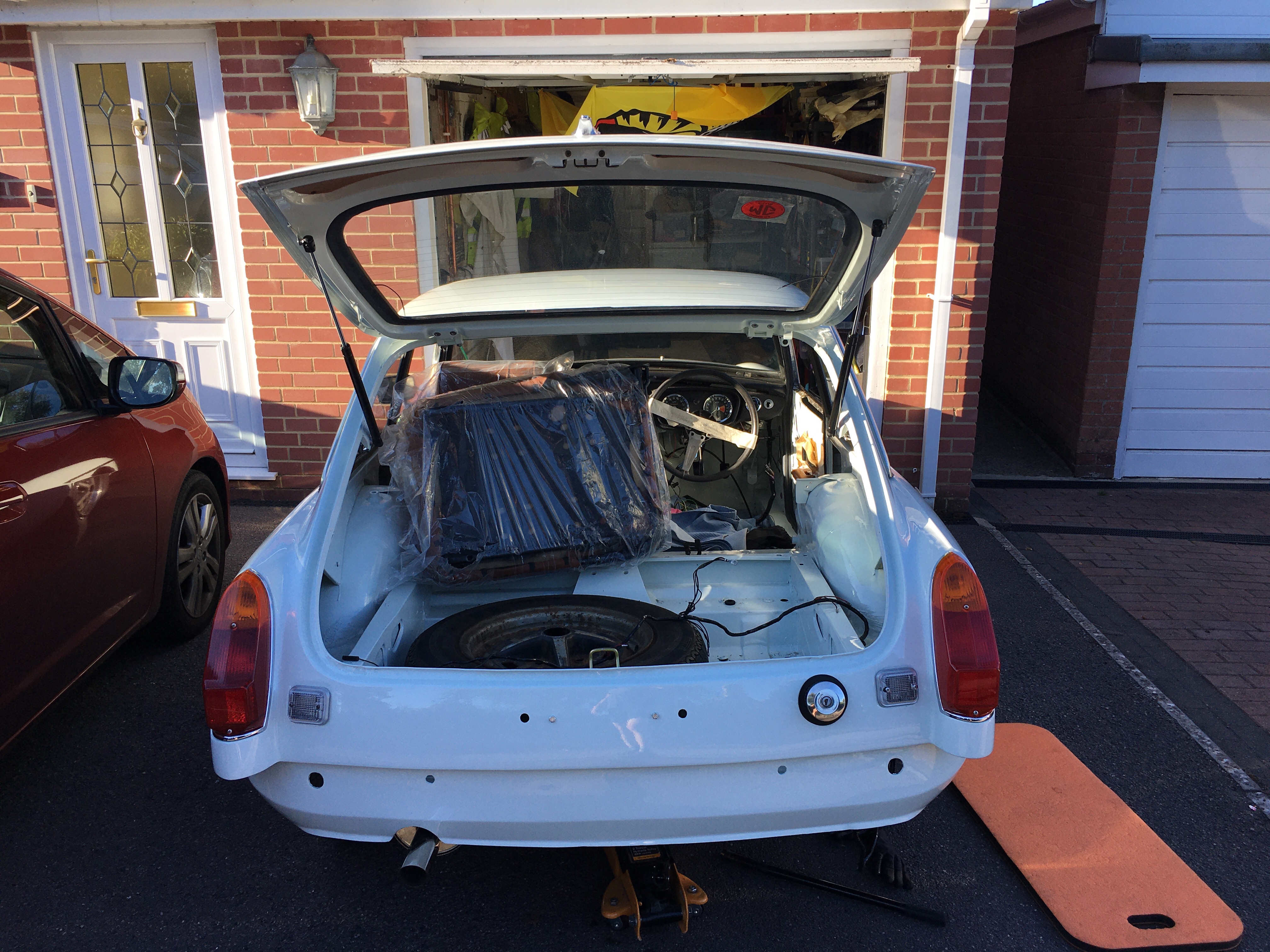
7&8 Nov 20 Starting progress

One advantage, perhaps the only advantage of lockdown is that we are forced to stay at home and not go ‘gadding about’ as we are normally inclined to do. So it was that after a most pleasant stoll in nearby Cirencester Park, Gloucestershire, as part of our permitted exercise, I found myself with a sunny late autumn afternoon to dedicate to the MG.

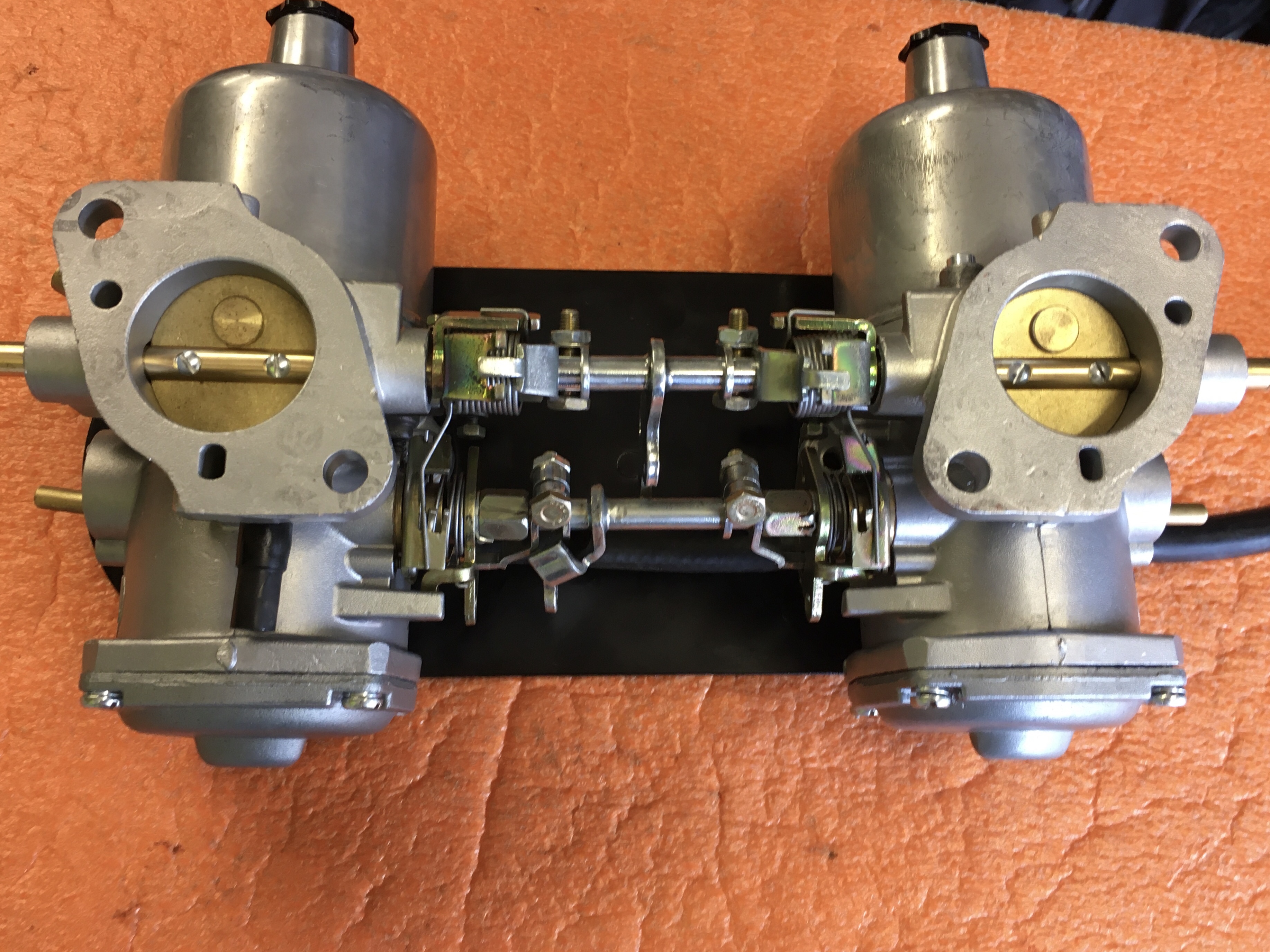
I decided to sort out the choke spindle on the carburetters (carbs for short) which I had managed to fit the wrong way around. What I haven’t recorded here is that I had previously corrected the throttle spindle which I had also fitted the wrong way around. Such is the lot of first time amateur car restorers such as myself, progress is riddled with little mistakes, however, with each mistake, I try to learn something. So to the choke spindle, which is an assembly comprising a spindle which sits within a cup on each carb (the MG has two). The choke mechanism operates when the choke handle is pulled on the dash. This causes the cable to tighten which, being attached to a lug on the spindle causes it to rotate. This rotation causes the choke mechanisms on both carbs to be operated because the ends of the spindles have lugs which fit onto the cams which themselves are on the end of the choke mechanism. The choke mechanism moves the needle inside each carb to richen the mixture, but also opens the throttle because the cams connect with a screw on the throttle spindle.

The fun begins when you realise that the spindles are not held in place in any way other than sitting in the cups on the carbs so when fitting the carbs you have to align the spindle ends (4 in total, 2 for the throttles, 2 for the chokes) with the cups, and have them aligned to the lugs (again 4 in total) while you are trying to to wriggle the carbs onto the mounting studs (4 in total). I make that around 12 points of contact which you are having to manage and it was certainly easier when I was able to phone a friend. To reverse the wrongly installed spindles, I loosened the carbs, but wanted to avoid taking them off as then you have to do the full accordian player impression as the two carbs writhe in your hands. The carb mounting studs are worth a mention, being located cruelly in the most awkward position and in perilous proximity to the razor sharp edges of the heat shield. It would be good to have three elbows on your arm at this point rather than the inadequate one we have to deal with. I won’t bore you with a blow by blow account, but suffice to say I got it all done in two attempts and only one skinned knuckle. I then fitted the air filters and went for a start up.

I connected the battery (ignition switch solution still pending), heard the familiar ticking of the fuel pump and turned the key. One click and then nothing. Mmm. I tried my spare battery, and it cranked over willingly but wouldn’t fire. Then I remembered to reconnect the coil wire I had disconnected. This time the engine started straight away, with full choke of course, and settled at a fast idle. After it had run for a minute or two I pushed the choke in and tweaked the idle speed to get it to idle correctly. I recorded the sound of the engine in the YouTube clip below. To get the authentic bass – use headphones. For an MGB is does sound rather tasty. Its obviously not set up right just yet, but it’ll do for the moment.

So that was a reasonable afternoon’s accomplishment. Today (Sunday) was a more gloomy day both weather and progress wise. A dull autumn day dawned and after finishing off the chores and watching Church online (another COVID consequence) I pushed the MG onto the drive intending to fit the engine fan I had bought recently. To get access to the pulley I determined it would be neccesssary to loosen the radiator and pull it away from the area. This is relatively simple on the MGB, being six 0.5″ bolts (what else) to remove. Having pulled the radiator back I realised that the fan I had bought was the wrong one – annoying as I thought I had searched it correctly. More catalogue searching required and another item for my MGB parts shop which I will be opening at some stage to sell on all the surplus parts I have amassed over three years. So I had to pointlessly put the radiator back again. It was then I remember that fitting the radiator is more difficult than removing it. The radiator is mounted by the aforementioned six bolts to a steel shroud which is fixed with eight bolts to the inner wings. The challenge is to get this all to align. The shroud in my MGB, despite being resplendant in shiny black from the paint shop, is I believe a bit warped. The off side is particularly difficult and I had to loosen all the bolts on the radiator and shroud on that side to get each bolt to bite on its thread. Having had this difficulty before, I was up to the challenge this time, and a bit of thinking and remembering got the job done in the end. All helped along by my Radio 4 soundtrack in the background, latterly a re run of ‘Just a minute’ with the late Nicholas Parsons.

Thanks for reading – God Bless and Stay Safe.

12 Aug 20 Releasing the carbs

Having established at the weekend, with Matt’s help, that the carburettors were blocked, and having consulted the ‘MG helpline’, A.K.A. my Dad, I found time this evening, with the help of my friend John, to investigate the problem. The UK was in the middle of a heat wave, one in which the temperature and humidity peaked between 5pm and 6pm arond 30 degrees, which was when we started to look at the MG. So the only right thing to do, while we wheeled the MG out, was to crack open a couple of cold beers and take a leasurely look at the problem. With John on board, this was going to be a logical approach to problem solving. Having already proven fuel would flow up to the carbs, we now knew the challenge was with the carb itself.

Step 1: Use a footpump to attempt to blow air into the carb. Result: No air passing through. Conclusion: Float/Needle valve stuck

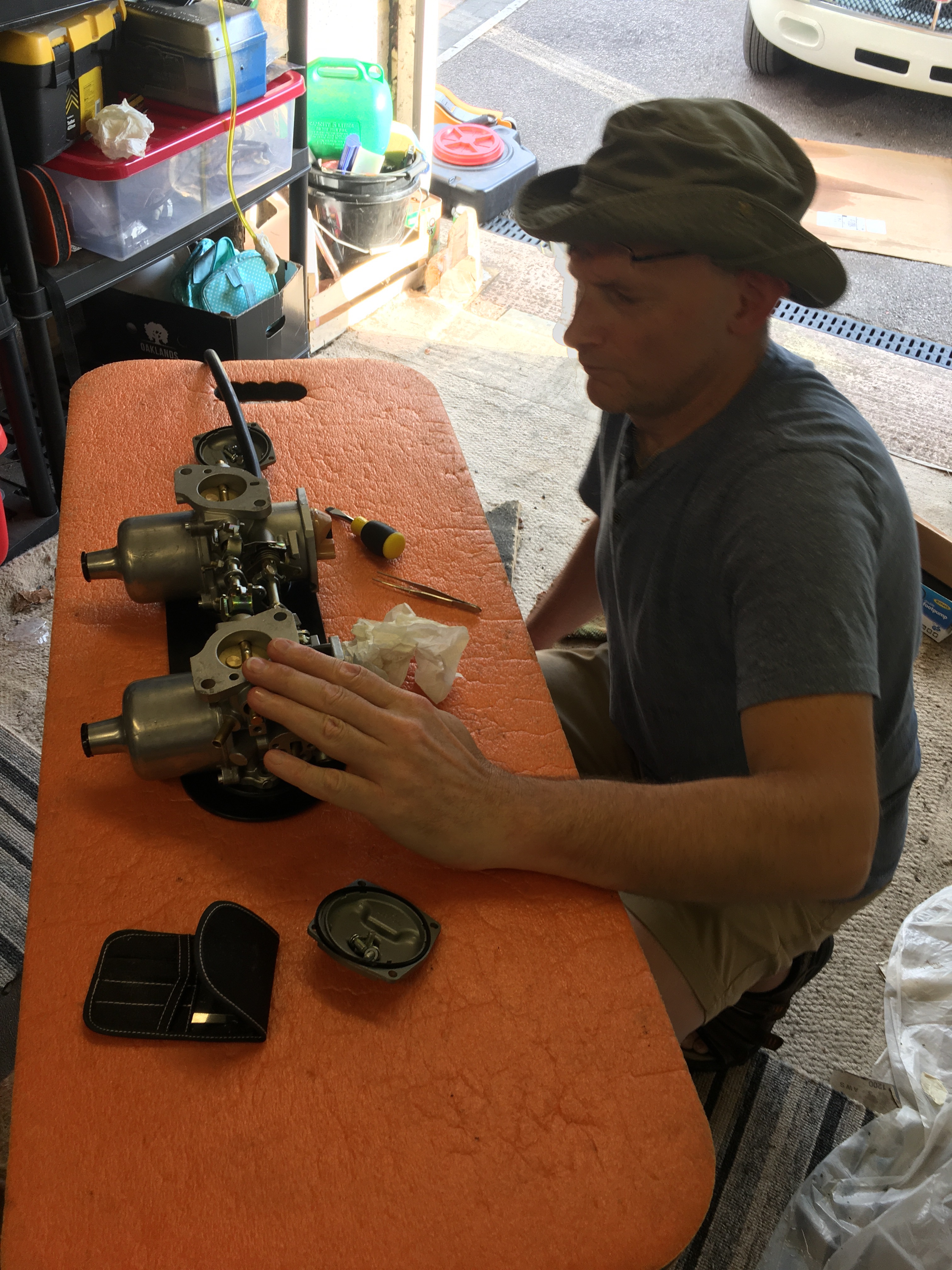
Step 2: Remove carbs. Removing the carbs in theory is easy, its just four nuts. In practice, its fiddly, because the nuts won’t come off without waggling them to the end of the studs and then getting the angle just right. Having two people on hand is a definate advantage here, unless you are an octopus. Next challenge was to keep the carbs together with the linkages intact. To do this, we had the idea to use the plate that holds the air filters as a sort of jig. That took a bit of work to get right, but without (much) swearing, the carbs rattled free of their studs and were on the work bench.

Step 3: Remove float chamber lids. These come off easily enough, although the ‘O’ ring on the front carb hopped out of its slot and showed little enthusiasm to pop back in. Using the footpump and with the float valve open we used the foot pump again to add pressure and with a nice ‘pop!’ the needle valve on the rear carb freed itself. Surely the front carb would do the same, but it wasn’t shifting, so John tickled it with a pair of fine tweezers and before long both carbs were wheezing along in harmony at each press of the pump. How satisfying.

Step 4: Reassemble and refit the carbs. Hmm. That float chamber ‘O’ ring did not want to play ball and needs to be replaced, however, we think we teased it back in place and made a seal on both float chamber lids. We then man handled and wiggled the carbs back onto their studs, tightened them up and connected the breather pipe, fuel line, throttle and choke linkages.

Step 5: Test start the engine. ‘Hang on a minute,’ said John ‘didn’t you say that the fuel pump and coil are always on when you connect the battery?’ A discussion ensued in which John advised me against firing the engine when we are not confident of how the wiring was configured. So we disconnected the ignition switch and using a multimeter, identified what the various terminals were and then attempted to connect the correct wires. As we were nearing a conclusion on this, the rain came in heavy so we abandoned the task for the day having made some actual progress, but with some work to go to achieve sustained running.

9 Aug 20 Fuelling around

So having demonstrated that the MG would start, it was time to connect up the fuel pipe and provide a reliable supply to the carbs to sustain running. I had a reliable assistant in the form of Matt (Ellie’s boyfriend). First we bought some fresh fuel and charged the tank with 5 litres. Next we connected the fuel pump wiring, connected the battery and heard a reassuring tick from the pump (err, surely after you turned on the ignition…). After a short while we were concerned that no fuel was flowing through and sure enough, on checking I found the pump was plumbed the wrong way around. I wonder who did that?

After a bit of replumbing and we were back in business although still there was no fuel feeding through to the filter let alone the carbs. Vaguely remembering something about air locks we released the pipe at the carbs end and with a hiss we started to see fuel travelling through the filter and turn up to the carbs. Progress!

But this wouldn’t be the Relentless Duck blog without some ‘issues’ and without detailing all the challenges, we did have a leak out of the fuel sender unit. Not being sure why this was leaking we set up a fuel can to catch the drips until the level was low enough for it to stop. The following day, on a break from work, a YouTube video showed how this should have been tightened up. Another day, another thing learned.

With fuel to the carbs, surely the MG would now fire up and continue running? Sadly not, the carbs refused to take the fuel and the removal of the lid from the float chamber revealed it to be dry. Oh dear. Further investigation needed, the outcome of which will be covered in a future post

1 Aug 20 a step forwards

I’ve had a problem with oil leaking from the oil filters area for a while and this has prevented me progressing the engine start because cranking the engine resulted in a pool of engine oil under the car. Having had several goes at refitting the oil filter to oil cooler union, today I used my brain and had Helen in the car cranking the engine over and me looking to see where the leak was coming from. Turns out the leak was from the oil filter ONTO the connection so I was looking in the wrong place. So my focus turned to sorting this connection out and following a phone call to Dad I removed and refitted it. No leak on cranking! Problem solved. I couldn’t resist cranking the engine over to fire (which it didn’t) but I did check and I was getting no spark so at least I know one of the problems to sort out.

This lovely engine bay will sound nice too one day
Oil everywhere but where from!

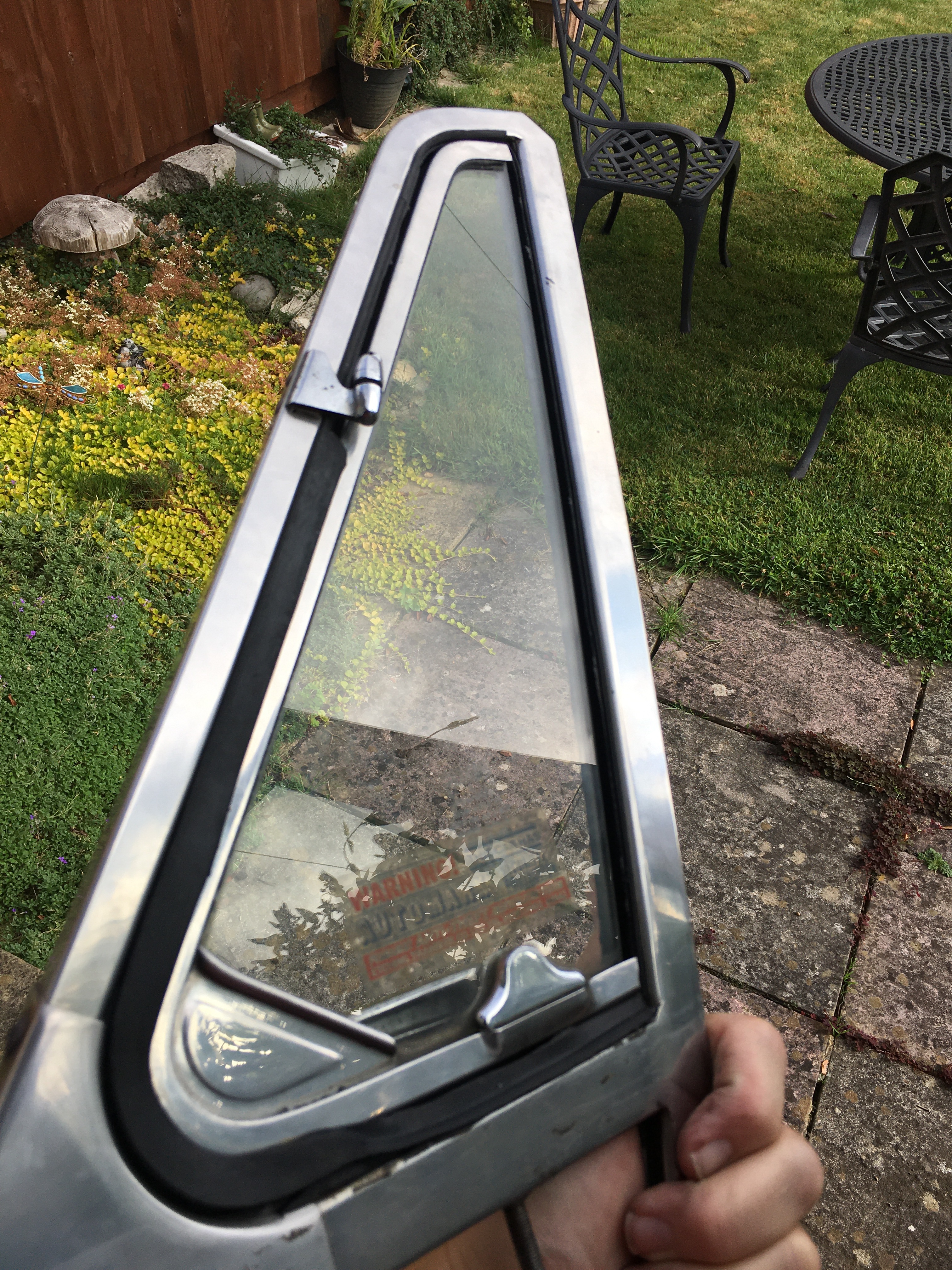
Back to earlier in the day and ongoing (and off going) saga of the doors and their glass. I had previously fitted the quarter lights but on inspection the runners were perished so I recently ordered some new one from Moss and had stripped them down. So while British Grand Prix Practice and Qualifying ran on I sat in the lounge working the new rubbers into place using a blunt ended tea spoon. Apart from where it dug into my palm painfully it wasn’t too bad and I followed the general approach that Andy from Wiltshire Windscreens showed me when he fitted the front and rear screens. So with these done I loosely fitted the back in. I will tighten them when I get the glass as I think you need them loose to get the whole mechanism in and then you tighten it all up.

Also in preparation for the glass (which I need to order) I removed the lower bracket from the rear glass stay. I have ordered new ones of these with nice new felt lining but they don’t come with the bracket. Rather than put the old brackets on as they were. I decided they would be better painted. I used a Hammerite black straight to rust paint, brush applied. It doesn’t need to look good but it should be protected against corrosion hence this approach. I was a bit delayed in fitting the stays as the paint is still drying so I will need to fit those when I next get the MG out.

Waiting for these to dry before fitting

So that’s about it. Keith the TV aerial guy was passing with his mate and said Hi. A couple of other people nodded their appreciation (or sympathy or contempt it’s hard to tell) so it was an encouraging day on the MG. Last thing to say is that to save my back I towed it out the garage this morning with my CRV which worked reasonably well although I did need a willing assistant which was of course the ever patient Helen.

A closing thought about gratitude…

30 Jul 20 Putting my back into it

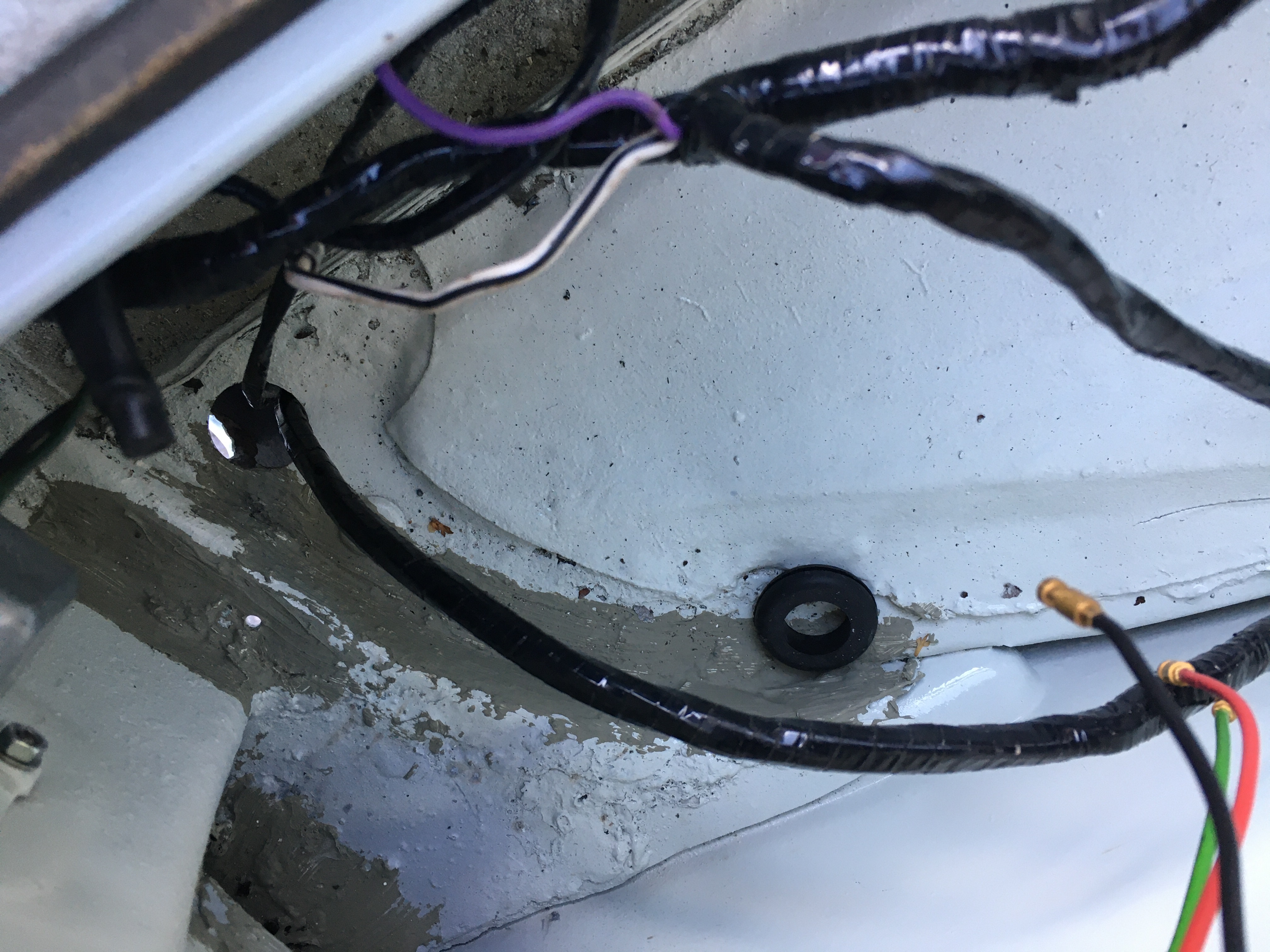
I was motivated to get outside after work today and do something useful on the MG. I have for a long time bemoaned how I routed the rear loom which turned out to foul the internal trim panels due to a temporary cognitive failure on my part. So I decided to reverse this and find a better route. Reversing the install turned out to be much simpler than I thought.

I then had to work out a better route and curiously it is remarkably unclear what this should be. After a bit of trial and error I have found a route which allows the loom to reach all the right places and also looks like a reasonable location to be clipped in place out of the way and logically. At least I hope so.

It was good to make some progress after having had a lot of (admittedly not entirely unpleasant) distractions. The only down side was a twinge in my back as the MG is getting heavier the more parts I bolt on, and my back is getting no stronger. I may revert to towing it up the drive until she’s a runner.

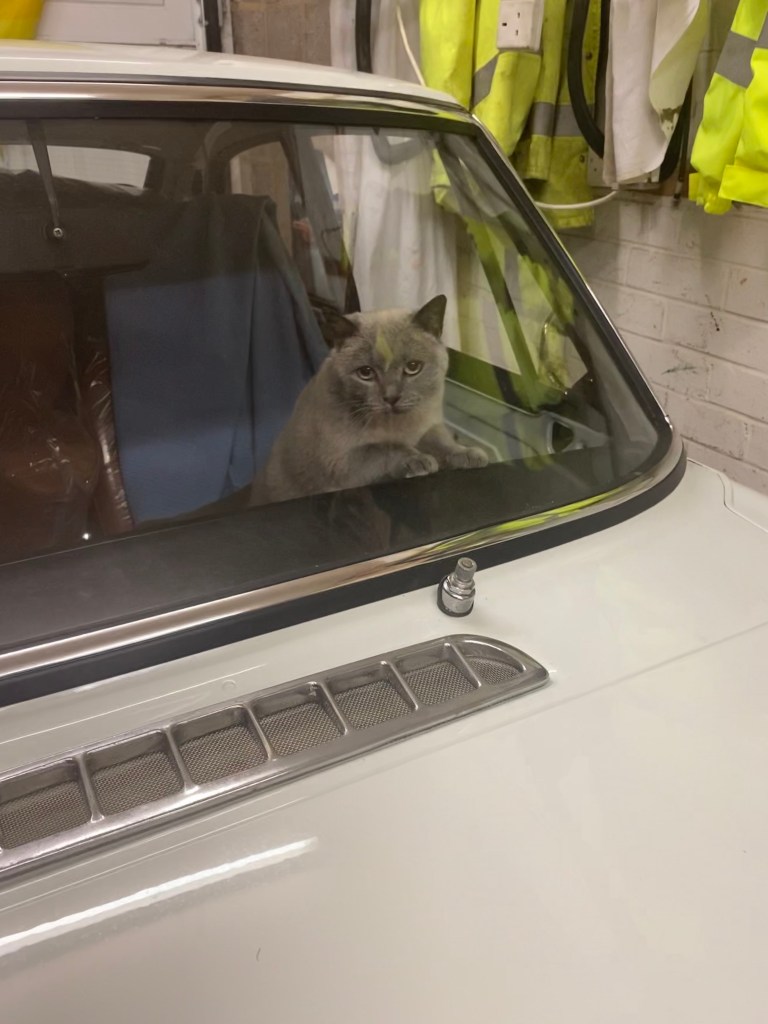
28 Apr 20 Daft cat

Just a quick entry to record this picture of our daft cat. My daughter popped into the garage to access the freezer and as often happens, the cat dived in to poke around the garage in search of a mouse (although she is a useless hunter and there are no mice in the garage, unless you count the 2 x frozen mice we have kept for the in-laws pet snake for when lockdown is over). Anyway, standard procedure is to close the door and leave her in there for ten minutes. She’s usually ready to come out. But tonight she decided to stay in the MG and Lou managed to capture this shot – daft cat. Pity she can’t sort out the timing!

Stay safe folks – God Bless

22 Feb 20 Re-fuse-ing to give up

Spent a couple of hours on the MG this afternoon. It was cold and windy so I confined myself to the garage. First job was to finish off fitting the new rubber oil cooler pipes. I am replacing the nasty braided ones which are very stiff with OE spec rubber which is a bit more pliant. This is an awkward fit and it requires a bit of coordination because the oil gauge pipe has to be fitted AFTER the pipe cooler pipe because otherwise the spanner crushes the oil gauge pipe. Have a guess how I know this? After fitting the pipes I had to fit the hateful grommets to the radiator shroud which is another awkward job. Anyway it’s done now.

It’s all a bit congested here

Next I decided to progress the wiring loom connections. Last week I had to unpick the loom due to poor routing so this week I put some of that back. I connected the alternator which is easy then had to take the coil off to get that connected properly. So far so good. I then checked the fuse box which I wasn’t convinced had been connected properly. Rather than rely on pictures on the internet I actually used the wiring diagram and managed to use up all the available wires so it must be right! (It is right really).

So onto the next thing and I identified a problem. The distributor, which is a new unit from Accuspark needs power which it gets from the coil. Unfortunately one of the cables is not long enough. It mentions this in the instructions which cheerfully say ‘you may have to lengthen the wire’. I might write back to them to say ‘you could just supply the right length wire.’ So I need to grab a pal who can joins a bit of wire for me

This is the probably definitely correctly connected fuse box

Final task today was to fit an earth wire to the inner wing. The original bolt had been painted over and the head rounded off when I tried to release it. Even my freeze spray couldn’t rescue the situation so I did the brutal thing and drilled it out. I managed to then get another bolt to fit and job done. Not a bad afternoon’s work.

1 Jan 20 blockage cleared

Happy new decade everyone! A mini post today to record me spending just half an hour in the garage during which I discovered that the heater control unit pipe was completely blocked with rusty crud. I found this when I was offering it up to where it is mounted on the engine and was asking myself how any coolant was supposed to flow through it when there was no hole. A quick prod with an old screwdriver proved that the crud could be dislodged fairly easy and this was also the case with the aperture into the engine water jacket.

I wondered to myself if this was possibly the reason the car overheated when I first fired it up shortly after buying it, and why the fan was set to be on the whole time. What a bodge by the previous owner, but satisfying to find this problem and be a step towards sorting it out.

The heater control with crud opened up
This is where it attaches to the engine block. I have removed the crud but it really needs a bit more work. Don’t know how I missed this when I had the engine out!

And finally, this is me, my better half and my in laws at a New Year’s Eve party last night

Rocking the night away!

30 Dec 19 Fuelling around

A good amount of time on the MG today. After dealing with the ironing pile (yes), I pushed the MG out into the winter sunshine and got stuck in. I warmed up first by fitting the rubber bung (or grommit if you prefer) over the hole in the transmission tunnel which is used to access the gearbox filler. This was stiff as hell, but a bit of soap helped it into place.

The tight space within which to manouvre the grommit into place

I then jacked up the o/s so I could access the fuel pump which I am sure you are all fed up hearing about. Well the good news is that it is now fitted snugly into its clamp, the wiring loom connections are on and the rubber pipe which connects the pump to the copper pipe under the car is fitted. So hurrah! It was a bit of a faff, but all it needed really was a bit of patience and perseverence. I think Mum-in-law’s Christmas cake may also have helped as I used the last slice to sustain me.

What’s better than cake, coffee and classic cars – don’t answer that!

I later spent some time routing the copper pipe around the engine bay. I wasn’t aiming for final fit, I just wanted to route it some more and try to figure out how to connect the fuel line to the carburettors. I have posted an enquiry to a FB group on this now, so just waiting for replies so I can finish this off [Post Blog note – response received, the mystery fittings are the overflows – who knew? I’ll need to buy some more pipe for these]. I did fit the fuel filter, so this is definately progressing.

The fuel filter fitted – just the last length to the carbs to sort out now

With the car jacked up I was able to connect the wiring loom to the starter motor, one more job towards my engine start milestone. This was easier than it looked with as usual the loom falling easily to hand and some helpful guidance on the interweb as to what goes where.

End of the starter motor showing the connection locations

I then turned my attention to troubleshooting the pesky alternator bolt which had sheared recently when I was attempting to tighten the fan belt. Good news folks, I was able to undo the bolt from the other end. I had anticipated having to use a stud extractor or some such, but I hadn’t realised it would be so easy. I do need to replace the adjusting pillar as its called because its a special item and I dont have any long enough bolts to put anything in temporarily. As ever, the SC Parts catalogue is well illustrated and shows the part clearly. I will probably order from Moss though, sorry SC! Sorting the alternator is critical to the build as not only does it need to be working, but I want to be certain its on right before I commit to fitting the radiator which will be largely in the way of it once fitted.

Having gone as far as I could go without answers from FB and ordering new parts I had a go at installing the wiper mechanism. This is semi-critical to engine start as it is better to have this all installed prior to the fascia being re-fitted because its easier to access. This should have been an easy job, but I was thwarted by what is either a parts misorder or pattern parts being different to the original. Briefly, there is a chrome collar which sits over the wiper drive rod and this sits on a rubber collar chamfered in the opposite direction so they fit nicely together. Except they didn’t. On inspection of the original vs. new part, the new chrome collar was significantly longer, so I could not get the securing nut to bite on the threads. I have ended up re-using the pitted old collars and will investigate further what this is all about. What I have learned in this process, is that if it isn’t fitting, then something is wrong. I have learned not to be frustrated or to attempt to ‘make it fit’ as that ends in disaster. While doing this job, the chrome collar fell down the vent in the scuttle panel. ‘Ha ha’, I said to myself, ‘I ‘ll get that easily enough.’ Mmm. It had fallen in an awkward place and my trusty magnetic tool pick was having no effect as the item was not magnetic. Hmm, time to thing again, so I went to open the inner vent which these particular MGB have under the fascia. But the vent it blocked by the half fitted wiper mechanism cable which is dangling in the way. So I have to release that to get to the vent opener, to allow me to scrape my knuckles putting my hand through the vent into the duct to retreive the collar. Then I did it again when I fitted the other side. Sigh. At times like this, I am sure the MG has a sense of humour. To prevent further incident I fitted the grille which goes over this vent AND the mesh that goes underneath.

The wiper mechanism – it looks fitted at least

So that was most of the day, I did also stick a washer and a nut on a bolt which secures the steering rack. For some reason Gavin the painter hadn’t wanted to fit that one, but with my box of nicely sorted imperial nuts, I was able to sort that out while I was there.

It was a really beautiful day today. Sunshine all day long and I had ages on the car. I took some photos of the car on the driveway, just because it looked so good in the low winter sun. Hope you enjoy them below.

Two things to finish off the day – first, hanging the MG wall plaque on the garage wall – a present from a colleague and my Mum – they both bought me the same thing! Secondly, a quick blast in our Suzuki Cappuccino. As it was a dry day, with no salt on the roads, it was too good an opportunity not to have a quick sprint up to the motorway and back. The Cappuccino gets light use all year round, but I am choosy when I take it out in winter due to its vulnerability to corosion. It was a nice way to end the day with the light just fading, the sky tinged with pink and 8500 on the tachometer.

MG – the legend lives on!

28 Dec 2019 Ho Ho Hoses

While we are here, I’d like to wish you all a Happy Christmas and New Year. Thanks for joining me on this journey. Nothing about hoses in this post, I was just looking for a Christmas related pun. First a word about Christmas – amongst a host of generous gifts, Helen (my wife) gave me a Land Rover Defender. Okay, so its a Lego kit, but still, I was very excited to receive it. I will devote a future post (or two) to this build.

The Lego LandRover Defender has about as many parts as the MG

In the meantime, here’s what I have been up to on the MG.

A grey afternoon today presented the first opportunity of the season to get out properly and progress the rebuild. First task was to fit the distributor and here I have a complaint about the design of the engine bay in this respect. Why is it neccessary to remove the oil cooler pipes to fit the distributor? okay, so its not a frequent task, but with the much space in the engine bay, why is the area around the distributor so congested? Complaint over, I coped, although tightening up the right hand bracket bolt involves removing the dip stick and even then you barely get quarter of a turn out of a spanner and a socket won’t go anywhere near. I will set the timing another day, although I have been researching this and getting familiar with how to tackle it. Its a new electronic unit and seems relatively straightforward to set up.

The fiendishly fiddly distributor – note loosened oil cooler pipe in background

Following up on the recent engine oil change, I thought it would be a good idea to fill the gearbox with oil today as this will hopefully stop my recurring nightmare of starting the engine with no oil in it. The gearbox was drained on removal by Austin the welder and has remained so ever since. For this job I had already bought gearbox oil from Classic Oils in Bicester along with a hand pump. I removed the grommit from behind the centre console which enables access to the gearbox dip stick and the filler neck. I then hooked the pump pipe onto the filler neck from underneath the car and pumped circa 3 litres of slippery oil into the gearbox ( I checked the capacity from the MG Restoration book). I think it was grateful. I checked the level using the dip stick and all seemed fine. The handpump was a bit of a workout, but I don’t suppose it will be a frequent job to change all the gearbox oil and it was a clean job. I could have probably filled the gearbox from inside using a funnel, but I was a bit worried about having a spill inside the car.

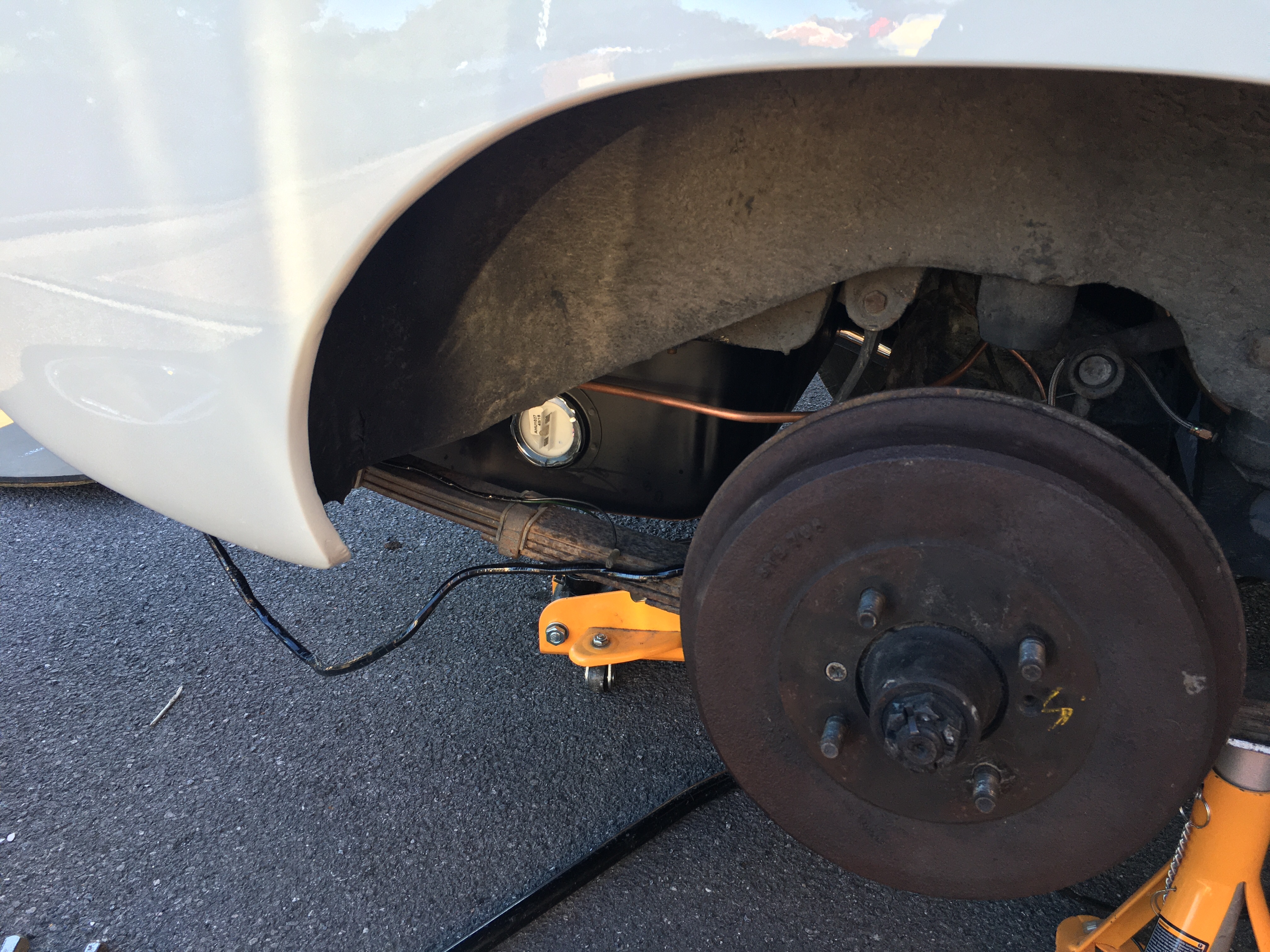
Next thing to investigate, was the fuel pump. This has been vexing me so today I just wanted to move my understanding forward rather than try to solve everything. To recap, the issue is that I need to connect the wires to it (and I didn’t know where they went), I still have to fit a rubber pipe from the pump to the pipe under the car and its not mounted properly. Today I consulted the wiring diagram (which is gradually beginning to make sense), and established that I needed a White and Black wire from the loom. As has been the case, I found these cables ran nicely down to the pump. That is, once I took them away from the C pillar where I had routed them previously. Not sure why I did that, I think I took them for the rear window demister. So small progress, but as I write this it’s becoming clearer now where the terminals go. Next time I work on the MG, I will connect the loom up and the remount the pump. This is to rectify a previous attempt to tighten the mounting clamp which was unsuccessful. This will be tedious because it is difficult to get a spanner in there, but once done, done. This will allow me to then work out how to fit the rubber pipe which connects to the copper pipe under the car. With this, the engine start tasks at the rear of the car will be complete. We are making progress Folks.

The fuel pump, tucked up in the rear arch needs fitting properly
Today’s work on the MG was powered by Mum-in-law’s Christmas Cake – Yum